Let’s start with an uncomfortable truth: the construction and engineering industry is wildly underserved when it comes to design quality online.
That’s not a criticism, it’s an observation, and frankly, an opportunity. For decades, firms in this space have won work through reputation, relationships, and the quality of what they deliver on site. The website was an afterthought. A digital business card.
Something your IT guy sorted out years ago and nobody’s touched since.
The problem is that the world has changed. And a website that looked acceptable in 2016 now quietly communicates something you probably don’t intend it to.
The Website That Became a Liability
Here’s how it usually goes. A director at a civil contracting or development firm shares a link before an introductory call. The potential client, investor, or talent prospect clicks through. Within about eight seconds, a judgment has already been made, not about the quality of your work, but about the quality of your business.
Cluttered layouts. Stock photography. A WordPress theme that’s been broken for months. Navigation that requires three clicks to find a basic service page. A portfolio buried under a generic “Projects” tab that loads slowly on mobile.
None of this reflects the firm you’ve actually built. But the first impression is already set.
Authority matters in development. Your website is often the first conversation, before you’ve said a word.
The disconnect is stark: firms delivering complex, multi-million dollar projects managing teams of 50, 100, 200 people represented by a website that looks like it was built for a startup that ran out of budget. That gap isn’t invisible. It’s costing you.
What’s Actually Happening in the Market
Most agencies that build websites for the built environment sector are marketing generalists, firms that work across every industry and treat construction the same way they’d treat a coffee brand or a physiotherapy clinic. The output looks the same too: blocky layouts, stock imagery of hard hats and cranes, headline copy that says “Building Tomorrow, Today.”
They’re using WordPress often with bloated theme builders layered on top and the result is a site that’s difficult to update, slow to load, and indistinguishable from every competitor in your space.
What established firms in this space actually need:
• A site that reflects the quality and scale of real-world projects
• Clear, structured communication of services without jargon or clutter
• A platform that’s easy to update internally, without calling a developer
• A portfolio that showcases work properly, not as an afterthought
• A credibility platform that works for talent attraction, not just lead generation
• Design that feels authoritative and considered, not templated
There’s real appetite for something better. Something cleaner. More structured, more modern, and more credible. The market has been asking for it, it’s just that very few people have been listening.
On AI Builders and “Good Enough”
There’s been a wave of AI website builders making the rounds, and it’s worth addressing directly. Yes, you can now generate a website in twenty minutes using a prompt. And the result will look fine. Fine is the problem.
AI can generate a layout. It cannot exercise judgment. It doesn’t know that your project portfolio needs to lead with your most commercially significant work, not your most recent. It doesn’t understand which service descriptions are doing the heavy lifting and which are creating confusion. It can’t tell you what to cut and cutting is usually where the real work happens.
What makes a website genuinely authoritative isn’t the tools used to build it. It’s the thinking behind the structure, the restraint in the design, and the clarity of the message. That takes experience and it takes someone who understands your industry specifically, not just websites in general.
AI can generate layouts. It cannot replace judgment.
You also don’t have time to learn a new platform, iterate through ten versions of a homepage, and debug the CMS when it breaks. You’re running a team. Winning bids. Managing projects. The idea that you’ll sort the website yourself or hand it off to someone junior internally tends to result in the same outdated presence you already have, just dressed up slightly differently.
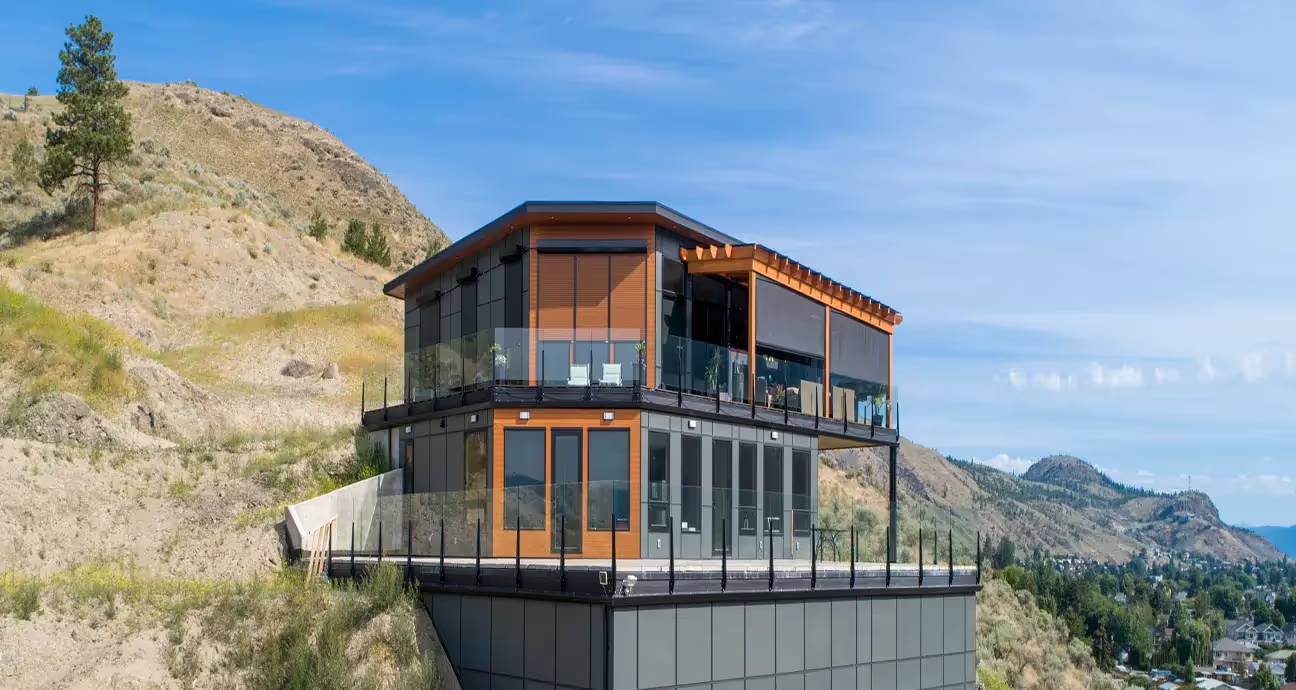
The Built Environment Deserves Better Design
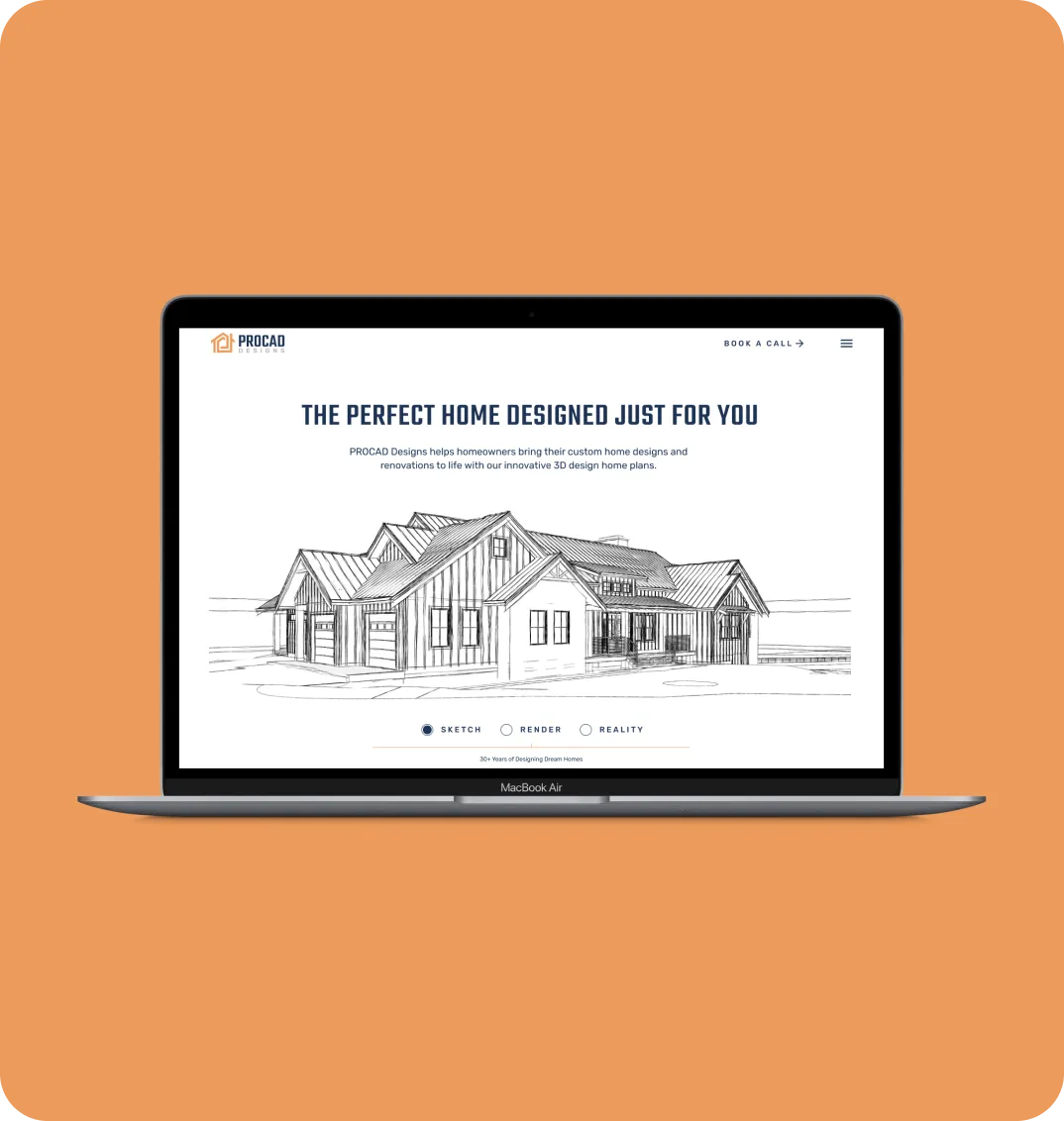
We work exclusively with firms that shape the physical world construction companies, civil contractors, engineering firms, real estate developers, planning and zoning practices. This isn’t a broad remit. It’s a deliberate focus.
Because working in a specific sector means you stop learning the basics with every new project. You understand the sales cycle, the typical buyer, the language that builds trust and the language that creates friction. You know what a project portfolio actually needs to communicate, and to whom.
The design approach we bring is editorial and structured built around hierarchy, negative space, and strong project showcasing. Not agency flash. Not startup energy. Calm, confident, and precise because that’s what earns trust with the buyers you’re trying to reach.
And we build in Webflow, which means the final site is yours, fully owned, fast, secure, and editable by your team without a developer on speed dial.
If you’re actively avoiding sending people to your website because it doesn’t reflect the level you’re operating at, that’s the clearest signal it’s time to do something about it.
Not because you need to “invest in marketing.” Because your website is the first thing a serious client, a talented hire, or a project partner will look at before deciding whether to take the conversation further. It should make that decision easy for them. Your work is premium. Your digital presence should be too.