The Client
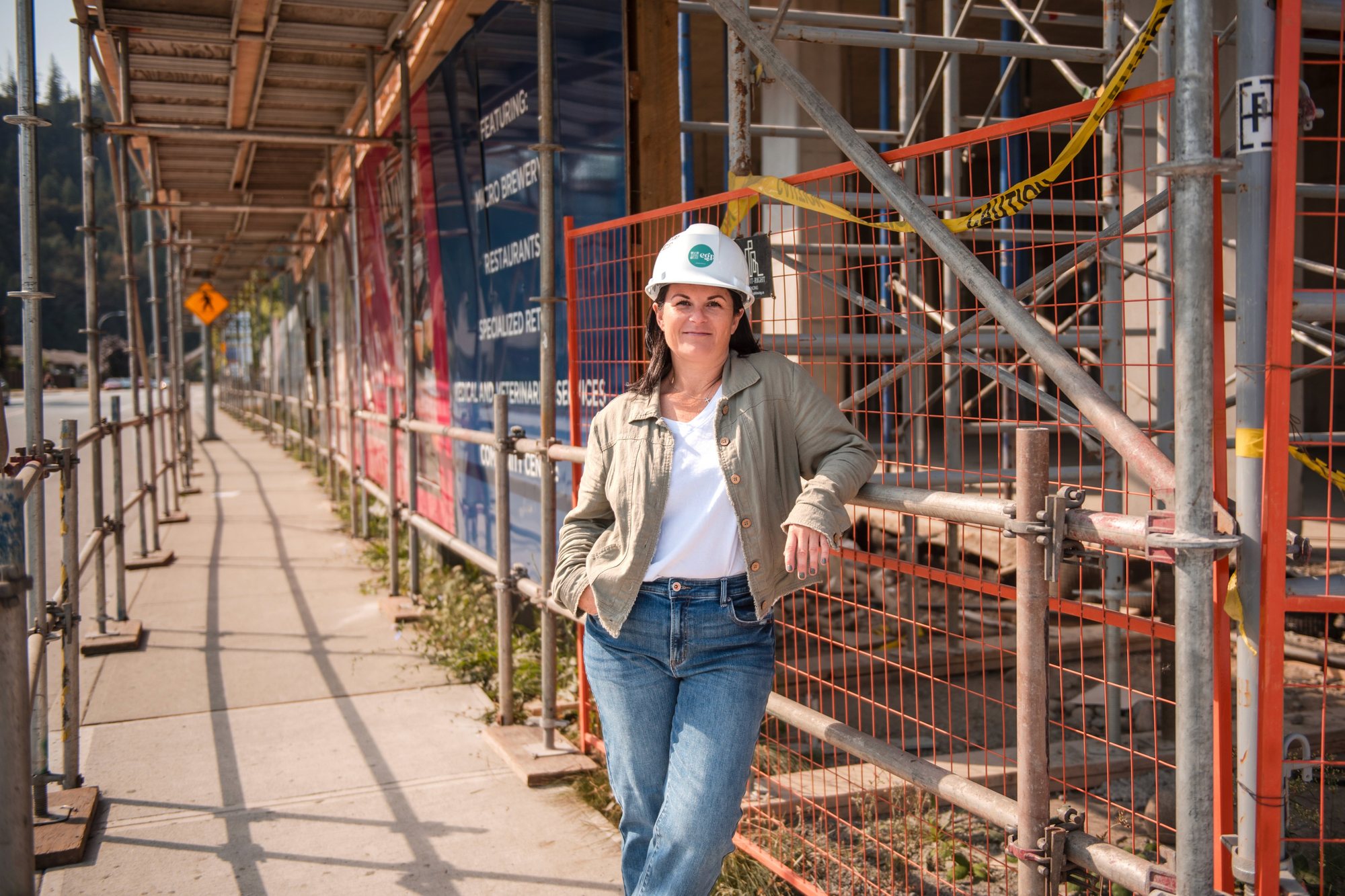
Carey Jones helps owner-led trades and construction businesses build companies that work with them, not because of them. With 20+ years of experience, a PMP certification and a leadership background, Carey partners with specialty trades, general contractors, builders and design-engineering firms at the moment growth starts breaking things. That's when the work picks up, the crew grows, and every decision, question and fire still runs through the owner.
Her approach is hands-on. She doesn't hand over a report and disappear, and she doesn't slot owners into a group program on someone else's schedule. She sits down with them at the kitchen table or in the site office, works out what's actually going on, sets the priorities, and stays involved while the systems get built. Her own words sum it up: she partners with them, walks alongside them, and then holds them accountable, on a timeline that fits the realities of the work.
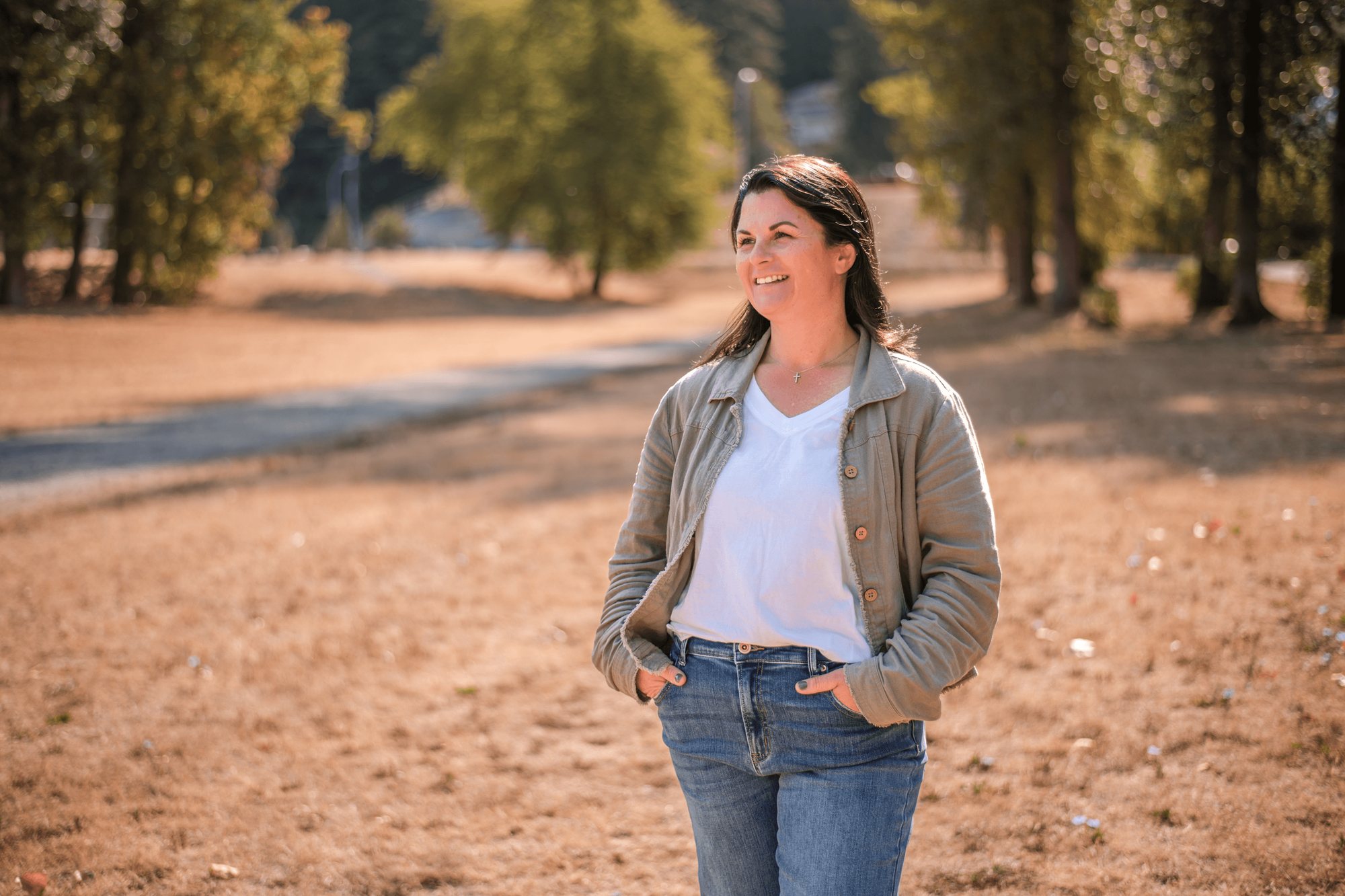
Carey operates under her company, Eden Growth Partners. But like most great consultants, her clients weren't buying a company name. They were buying Carey.
The Challenge
Carey's first website was built out of urgent need. She needed something live, fast, so she used AI to put it together. That's a completely reasonable move, and one we see all the time from independent consultants who are busy doing the work rather than marketing it.
The site did its basic job. It even got the point across to one prospect, who read it and forwarded it to his business partner. But Carey knew it wasn't telling the whole story. In her words, it didn't explain her positioning well, it didn't sound like her, and it said very little about why a trades owner should choose her over anyone else.
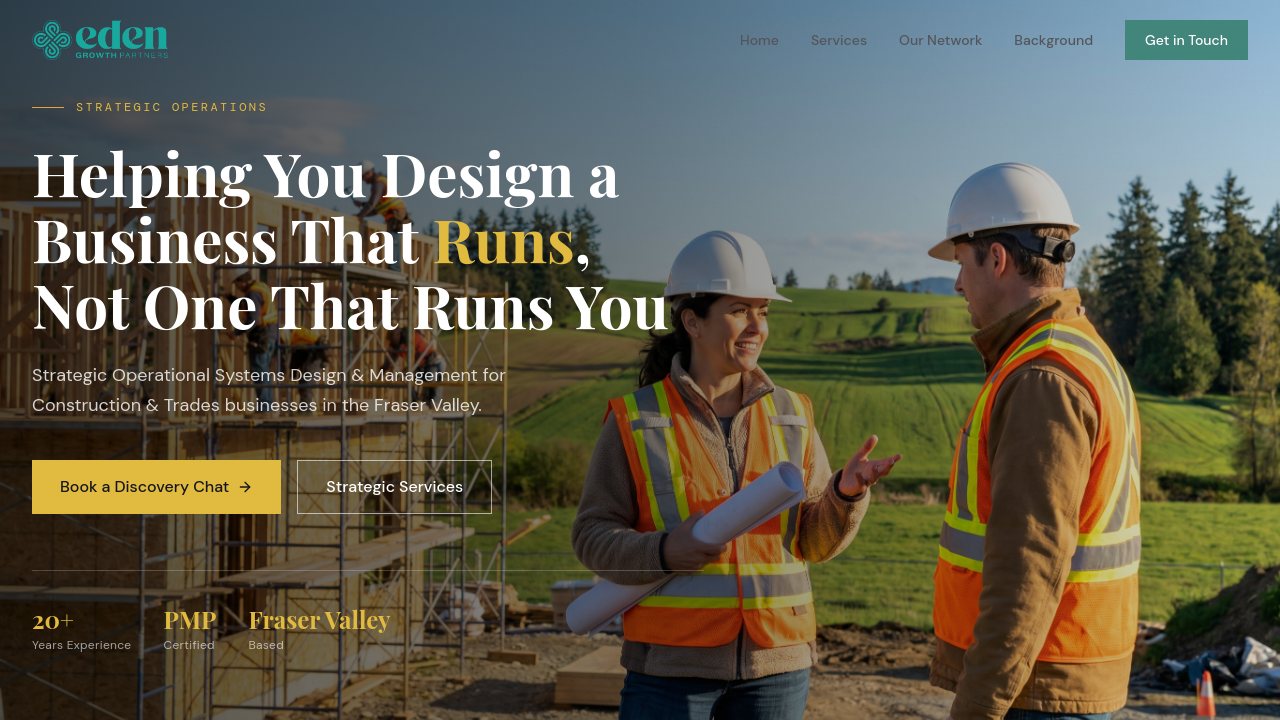
Before: Carey's AI-built Eden Growth Partners homepage, led by a stock photo of two people who aren't Carey.
When we dug in, we found four problems stacked on top of each other.
The website was doing the wrong job. Carey's business runs on trust and referrals. Nobody in the trades lands on a consultant's website cold and books a call. They hear about Carey from a peer, meet her at an event, or get a recommendation, and then they go looking. So the website isn't a lead-generation engine. It's a validation tool, the moment someone checks whether what they heard holds up. An AI-generated template built around generic "services" and "solutions" can't pass that test.
The brand was split in two. Carey's clients bought into her. Her Instagram had already shifted to a personal brand under the handle Carey Helps Trades. But her website, domain and business cards all pointed to Eden Growth Partners. Someone would hear about Carey, search her name and find nothing, or find a company name they didn't connect to her. We saw this firsthand: we recommended Carey to someone, and they came back saying they couldn't find her online. The old domain had a rating of 0.5 out of 100, so there was no search equity to protect.
The copy sounded like a consultancy, and Carey is the opposite of one. Her ideal clients are tradespeople. They can smell corporate language from a mile off, and Carey was clear she didn't want "consultancy vibes." AI-written copy tends to drift toward vague, polished filler like "streamlined solutions," "operational excellence," and "unlocking growth." None of that speaks to an owner who's up at 11pm doing invoices and feeling guilty about missing another family dinner.
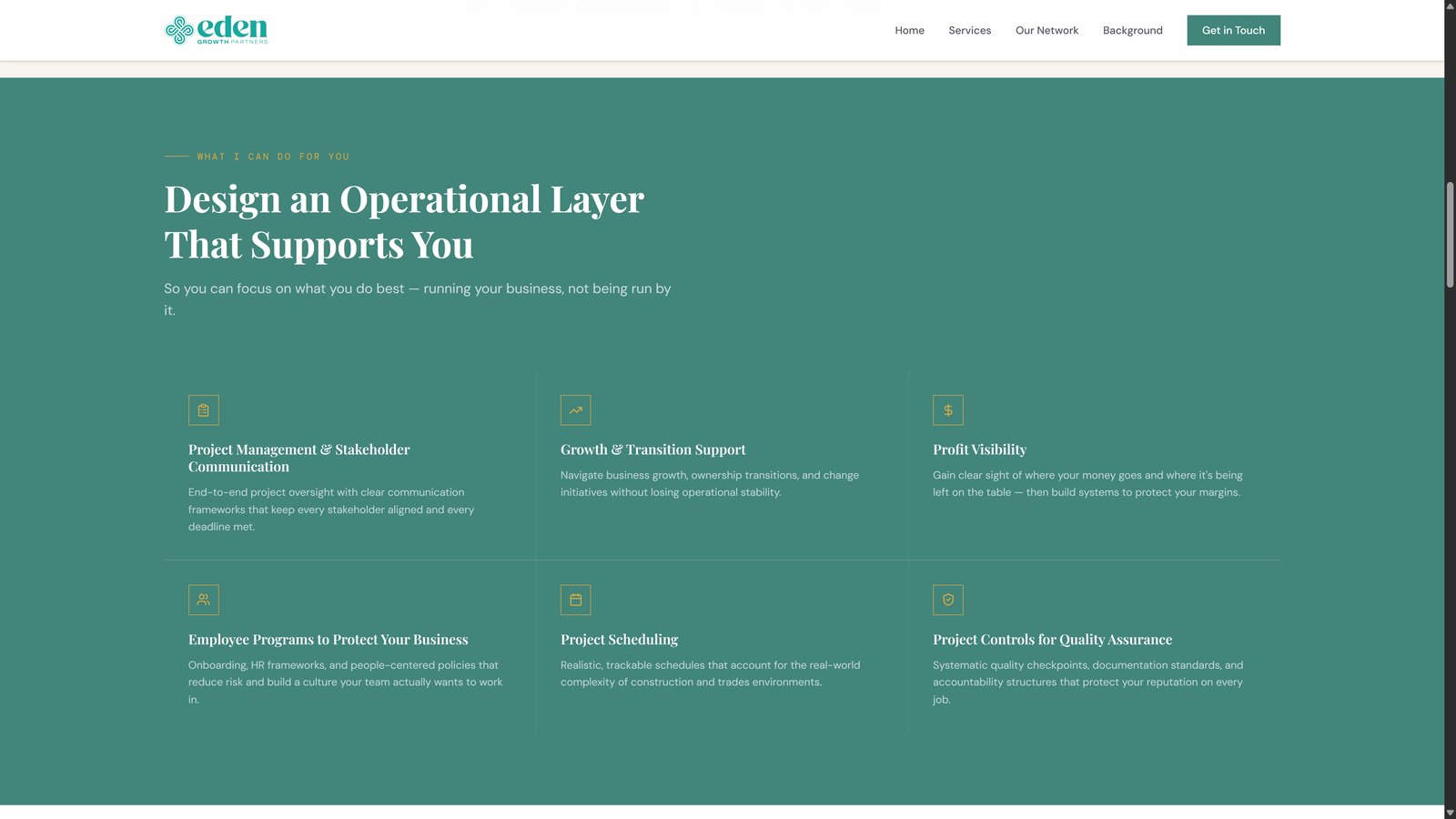
Before: the old services section, written in consulting language like "operational layer" and "stakeholder communication."
Her real differentiator was invisible. Carey competes, loosely, with bookkeepers, operations outsourcers and group coaching programs for contractors. Each solves one piece of the puzzle. What sets Carey apart is that she comes alongside owners right away and stays through implementation. One builder chose her over a similarly priced group program for exactly this reason: she offered immediate relief. None of that showed up on the old site.
So the brief was clear. Build Carey a website that feels as calm, grounded and trustworthy as she is in person, so that when a referral lands on it, the only reaction is: yes, she's the one.
The Solution
Carey came to us through ProjectOne, our website service for founder-led, service-based businesses. It gives her a fully custom, strategically written site built in Framer, for one monthly price, with no large upfront project fee and no agency-length timeline. It's also the opposite of where she started. Every ProjectOne site is planned, written, designed and built by real people, with no AI-generated shortcuts.
1. We started with strategy, not pixels
Before we touched design, we built a full brand strategy and positioning document: purpose, mission, vision, positioning, brand pillars, personality, tone of voice, ideal client profile and messaging themes. The central idea was simple and very Carey:
You build structures every day. We help you build the business behind them.
That foundation metaphor ran through everything. Just like a building, a trades business needs a strong base before you add floors. Carey's whole pitch is stabilize first, then scale. If you pile more software, people and customers onto a broken system, it just breaks faster. The strategy gave the copy and the design one clear message to organise around.
We then pressure-tested the strategy with Carey through her feedback and a working session. We kept what landed, like the house metaphor, the vision statement and the core messaging themes. We softened what felt too technical, dropping heavy "operating system" language where it read as jargon. And wherever Carey's own words were stronger than ours, we used hers. The best copy often comes straight from the client's mouth. Our job is to hear it and put it in the right place.
2. We made the big brand call: person first, company in the footer
The biggest decision of the project wasn't a colour or a font. It was whose name goes on the front door.
We walked Carey through the trade-offs honestly. A personal brand builds trust fast and simplifies everything, but it's harder to sell one day and can make hiring trickier. A company brand is easier to scale, but only once it has recognition, and Eden Growth Partners didn't have any yet. We showed her how other clients of ours handle the same question: consultants who lead with their name while their registered company quietly sits in the footer and handles the invoicing.
The key reframe was that these are two separate decisions, not one. The market-facing brand is what people remember, search for and recommend. The delivery entity is what sends the invoice. Carey's buyers trust people over entities, so the personal brand earns the trust and the company delivers the work.
So we went all in. Carey leads as the front-facing brand, anchored by her positioning handle Carey Helps Trades. That one phrase names the person, the action and the industry, and it's already searchable. Eden Growth Partners stays as the legal and invoicing entity, visible but quiet in the footer. The site now lives at careyjones.ca, so the name people hear is the name they type.
This isn't a permanent choice. It's a sequence: person-led now, company-endorsed, with room to shift weight toward the company as the team grows.
3. We rewrote every word in Carey's voice
With the strategy locked, our copywriter rewrote the homepage from scratch using the StoryBrand framework. In that structure, the customer is the hero of the story, and Carey is the guide who helps them win.
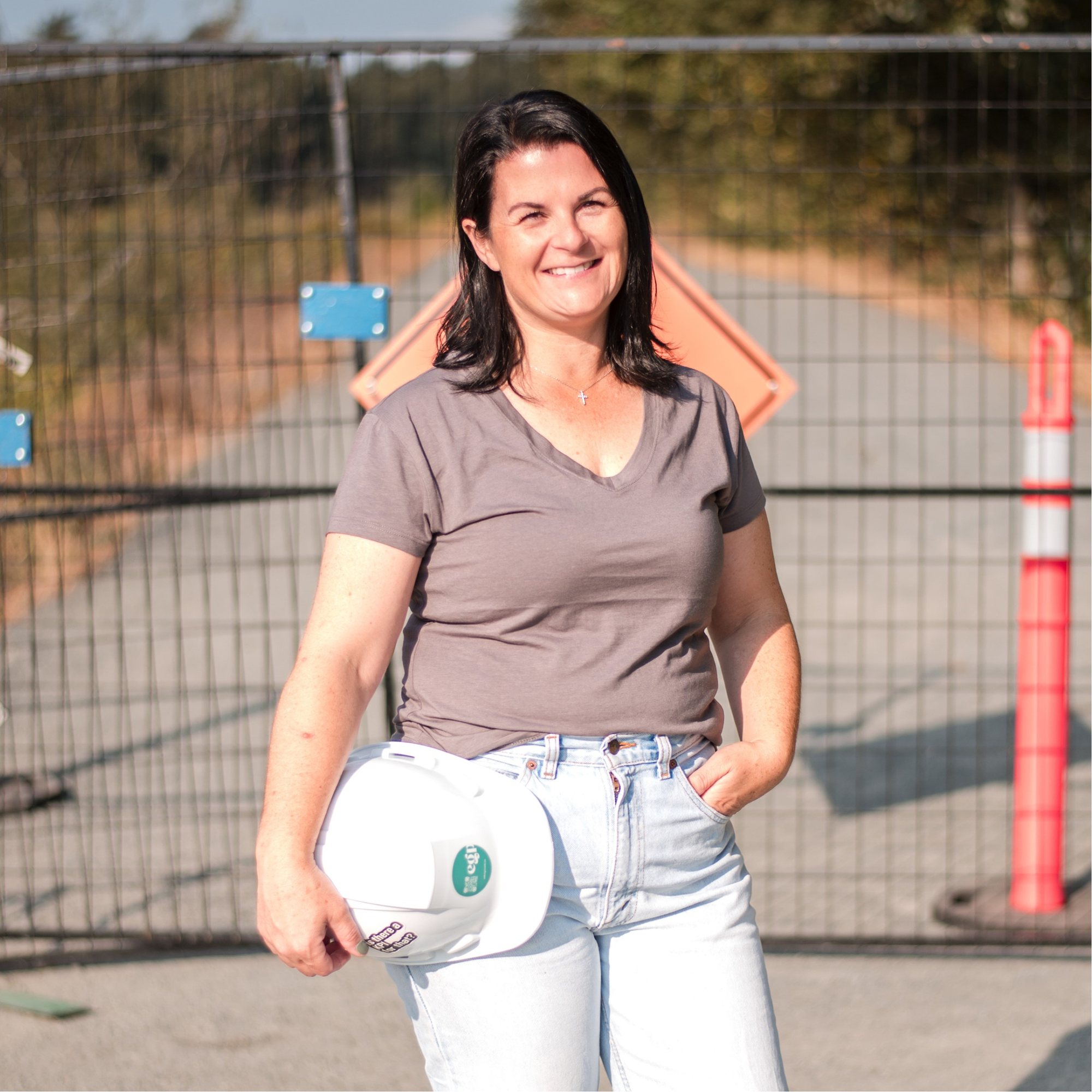
The hero leads with Carey's face. Carey had a clear picture of what visitors should see first: her. Not a stock photo of a hard hat, and not a bio buried at the bottom of the page. A referral visitor lands and immediately confirms they've found the right person.
The problem is described the way owners actually feel it. We built on Carey's questionnaire answers: owners who built their businesses off their backs, where the business became unmanageable, where scheduling, finances, customer calls, payroll and a dozen other plates are spinning at once. We borrowed one of her sharpest insights too. It's not "mom guilt," it's owner guilt, the constant pull between the business and the people you built it for.
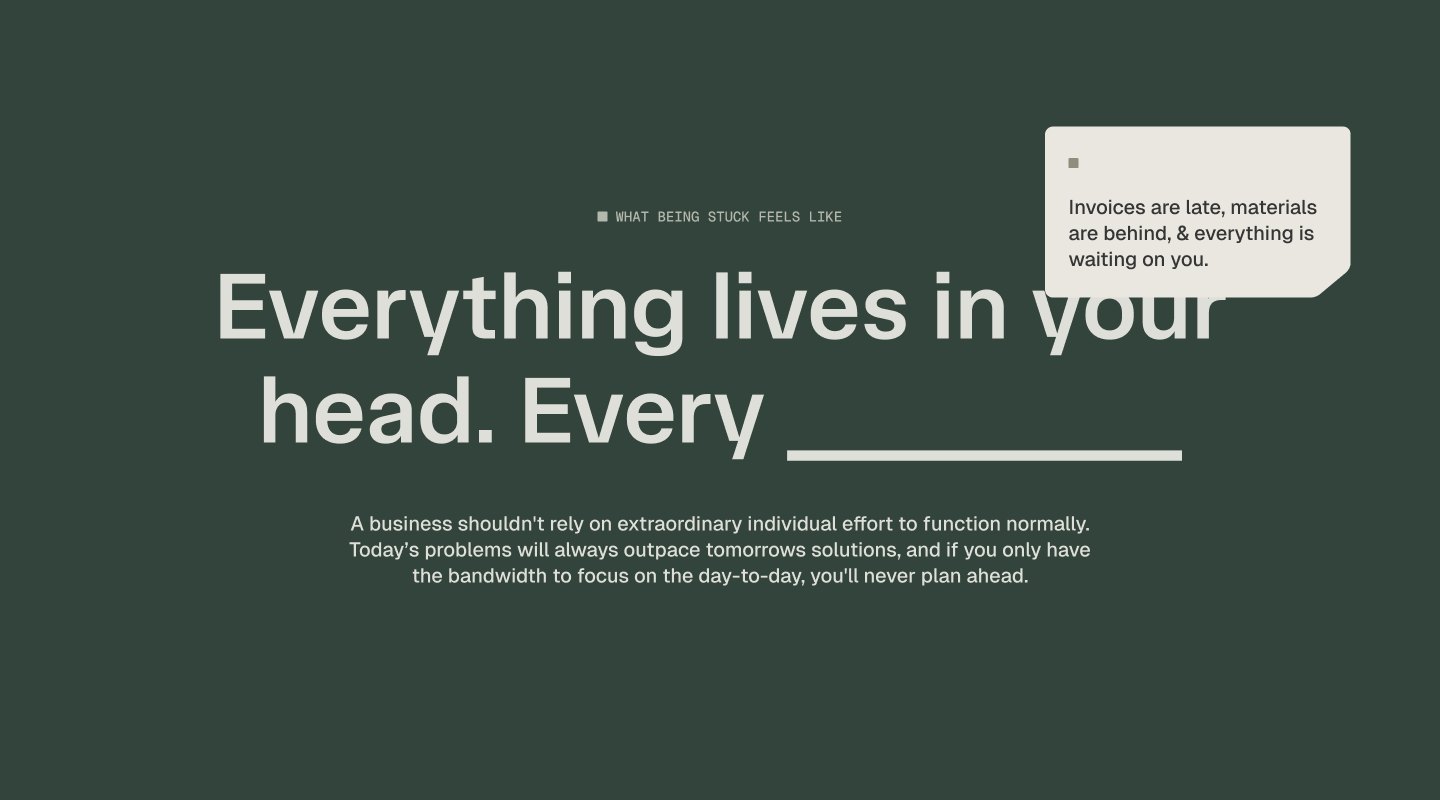
After: the new problem section puts the owner's day into their own words.
The process fits on one screen. We condensed Carey's approach into a simple three-step framework. Step one: observe and audit. Step two: build a custom plan around the owner's budget, goals and priorities. Step three: the outcome, which is stability, clarity and the freedom to focus on growth. This section's job is to show overwhelmed owners how easy it is to start. Step one, step two, step three, and you're moving.
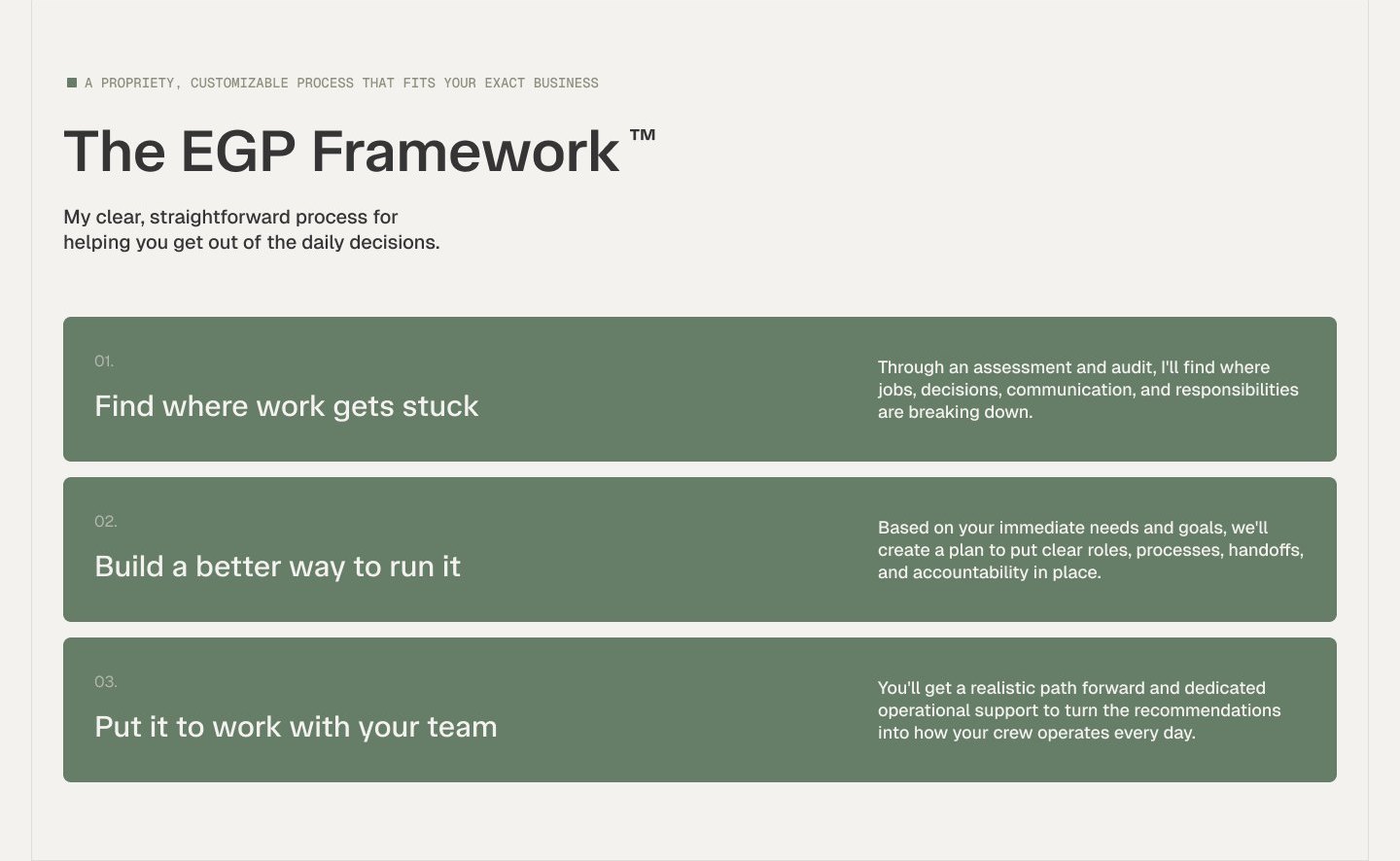
After: Carey's three-step process, the EGP Framework, fits on one screen.
The about section is built on "coming alongside." We tightened it from three paragraphs to two and centred it on what makes Carey different. She isn't a group program with a fixed Tuesday 2pm slot. She shows up, sits down, and brings immediate relief while the longer-term systems get built.
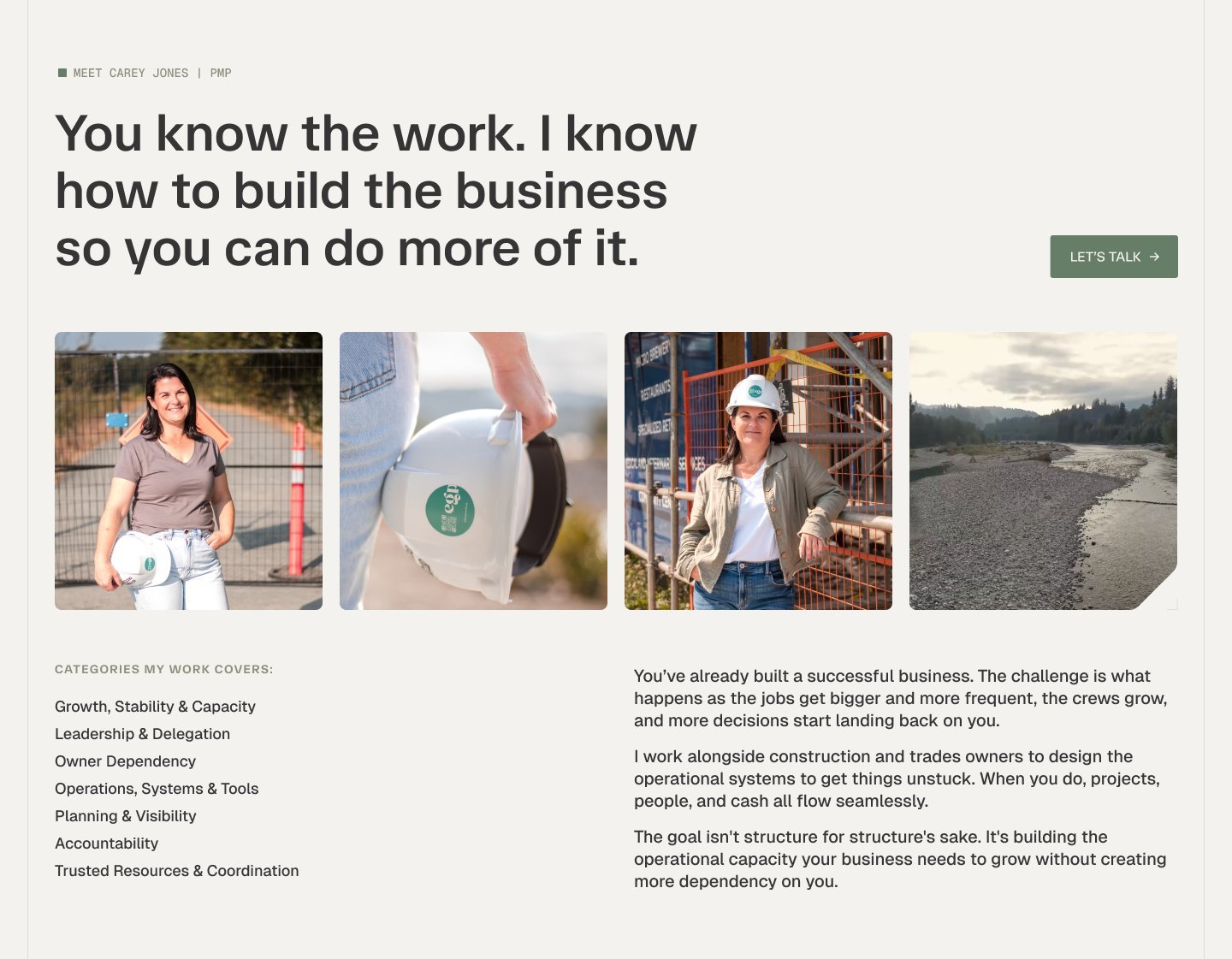
After: the about section introduces Carey through real photos and plain language.
The "good fit / not a good fit" section does the qualifying. It's a two-column block where owners can see themselves instantly. A good fit: owner-operator, a team of roughly 2 to 50, every decision running through you, growth making things harder instead of easier. Not a good fit: already streamlined, with multiple departments running independently. Underneath sits a catch-all line, don't fit neatly? Reach out anyway, so no good prospect clicks away.
The industries are named out loud. Tradespeople scan fast, and if they don't see themselves, they leave. So we listed them plainly: HVAC, electrical, plumbing, roofing, landscaping, carpentry, general contractors, developers, civil and infrastructure, plus design and engineering firms as a secondary group.
Proof over promises. Carey's work is confidential, and she doesn't name clients. So we planned anonymous transformation-style case studies built around industry, challenge and result, focusing on what owners care about most: hours bought back, capacity, and stress levels.
The whole voice follows one rule from the brand strategy: speak like someone who's spent time on a job site. Simple, clear and confident. No buzzwords, no hype, no corporate consulting language.
4. We replaced "AI generic" with real photography
This is where the transformation becomes visible. AI-built sites have a look: stock imagery, placeholder people, and visuals that could belong to any business in any industry. For a brand built entirely on personal trust, that's a problem. You can't ask someone to trust you while showing them a stranger.
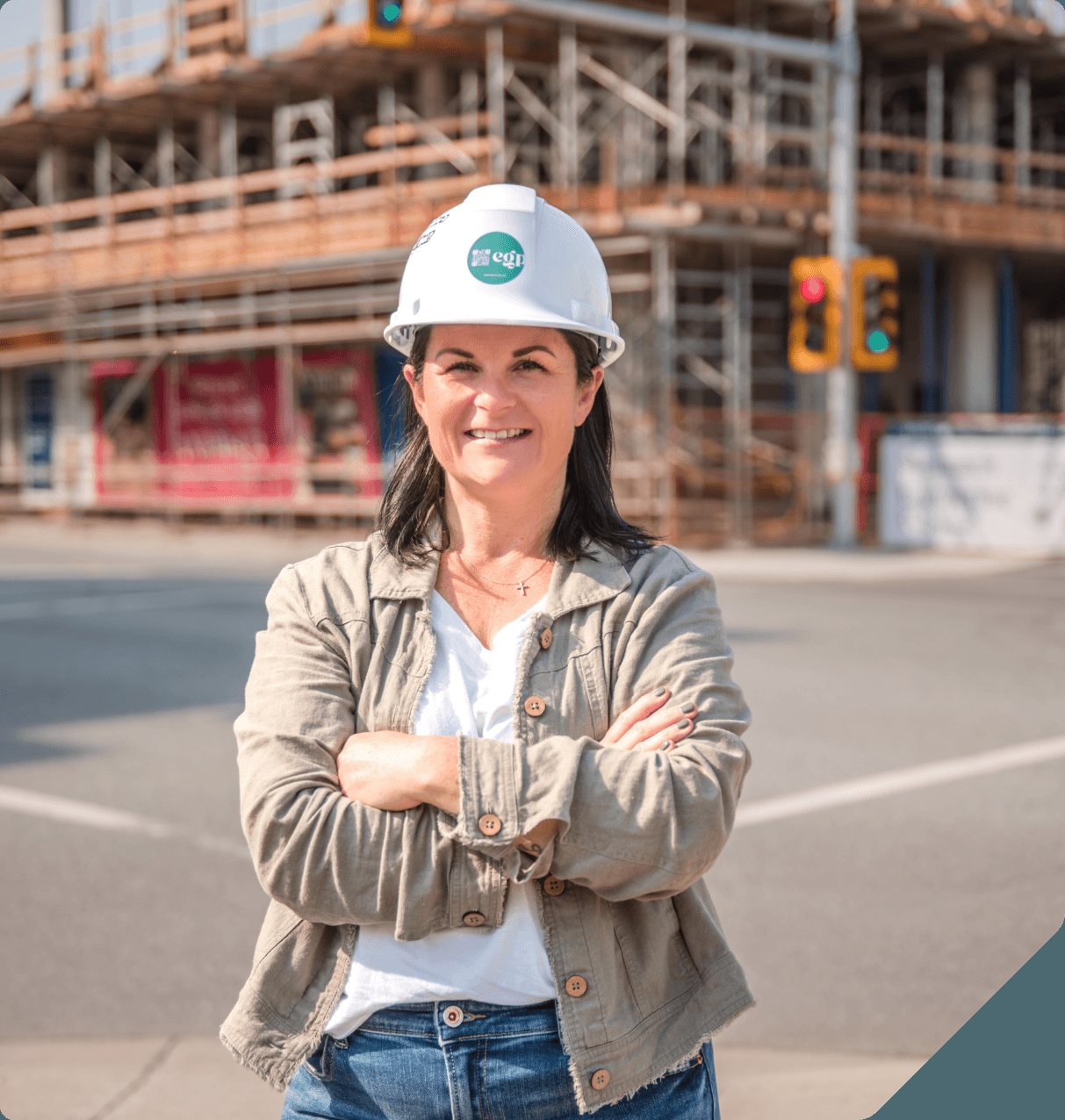
So we planned a professional photo shoot with Carey, capturing her in real settings that feel like her world: grounded, warm and approachable, not staged corporate headshots. Those photos now carry the site. When Carey said she wanted visitors to see her face first, this is what made it possible to do well.
Photography does something copy can't. It lets a prospect meet Carey before they meet her. By the time they're on a call, they already feel like they know her.
5. We designed a brand that feels calm, grounded and built for the trades
Carey told us exactly how she wanted people to feel when they landed on the site: that it's run by a calm, grounded person who is construction-focused and here to help. Her chosen brand adjectives were approachable, confident, professional, trustworthy, calm, loyal, reliable and direct.
Our senior designers translated that into a visual direction rooted in the trades. The palette leans into greens, greys, burnt orange and tan: earthy, natural colours that feel at home on a job site rather than in a boardroom. The typography is clean and confident without being cold. Layouts have room to breathe, because the people Carey serves already have enough noise in their day.
Carey also gave us one of the best brand briefs we've ever received. When we asked which celebrity her brand would be, she said Brad Pitt: well-known, long-standing, timeless, polished and attractive, yet somehow approachable and genuine. That balance of premium and down-to-earth became our north star. The site had to look like it belonged next to anyone in the industry, while still feeling like a conversation over coffee.

Nothing here came from a template. There were no swapped colours on someone else's layout. Every section was wireframed, written and designed from scratch around Carey's business, her audience and her goals.
6. We built it in Framer, so it's fast, premium and easy to grow
As official Framer Experts, we designed, built and QA'd the site in Framer. For Carey, that means a site that loads fast, looks sharp on every device, and has the polish of a custom build without plugins, complicated maintenance, or a developer on call for every small update.
Hosting is included throughout her payment term, so there's nothing technical for her to manage. At the end of the term, the choice is hers: take ownership of the site in her own Framer account, or renew and have us redesign and rebuild it as her business grows. That matters for someone like Carey. As her anonymous case studies come in, her assessment tool launches, and her offering evolves, her website can evolve with her.
The Result
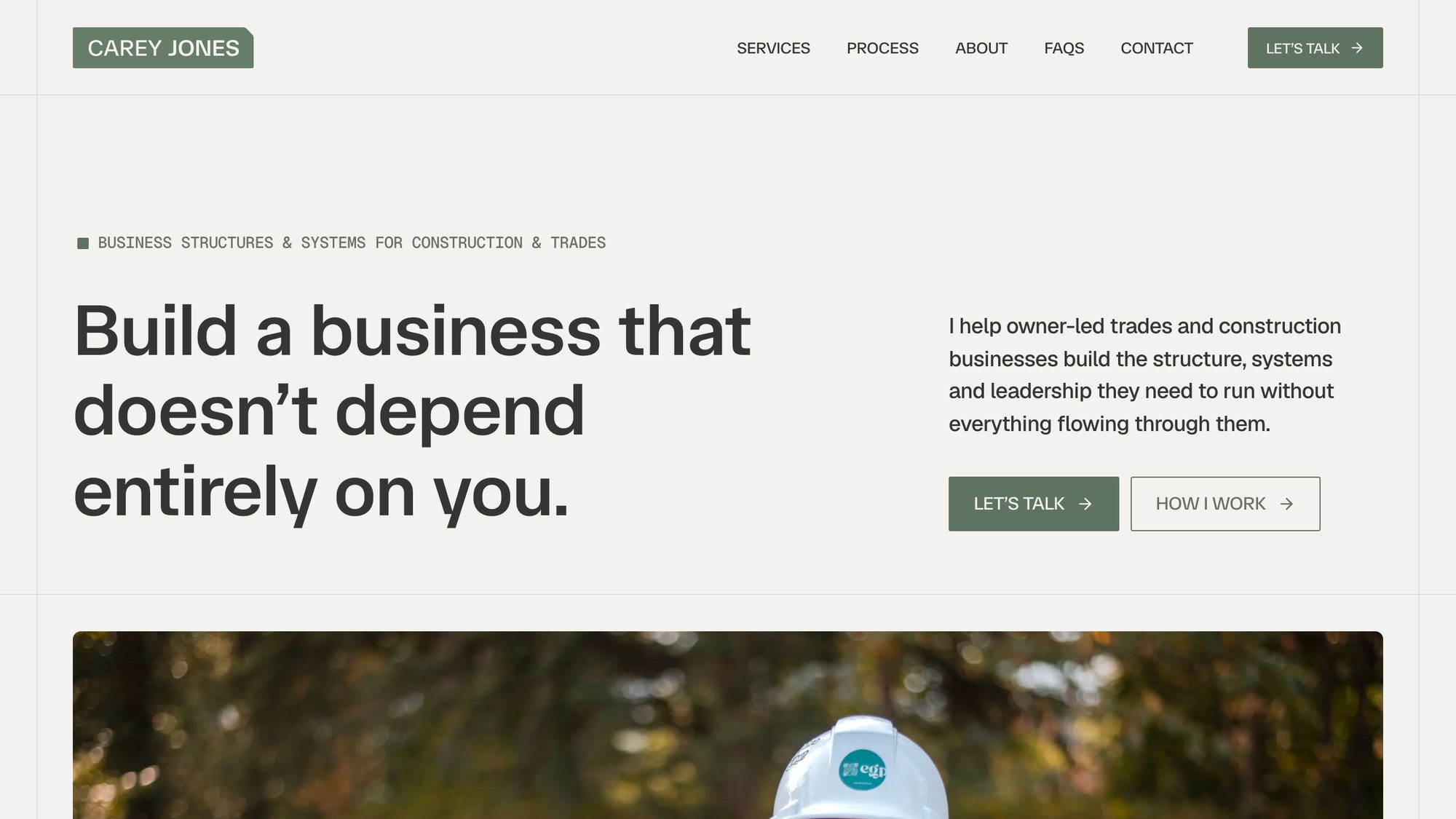
After: the new careyjones.ca, built in Framer.
The new careyjones.ca does what the old site never could. It sounds like Carey, looks like Carey, and tells trades owners in seconds that they've found someone who understands their world.
Most importantly, it does its real job. When a builder hears "you should talk to Carey" and looks her up, what they find now confirms the recommendation instead of creating doubt. Her name, her face, her voice and her positioning all line up: the person they heard about, the handle they follow on Instagram, and the domain they type. One brand, one story.
The shift from DIY AI to premium, professional brand wasn't about adding bells and whistles. It was about alignment: getting the website to finally match the quality of the person behind it.
What Other Consultants Can Learn From This
If you're an independent consultant, coach or advisor, Carey's story is probably familiar. Your expertise has outgrown your online presence. A few lessons from this project apply well beyond the trades:
Know what your website is for. If your business runs on referrals, your site is a validation tool, not a billboard. Design it to confirm trust, not to chase strangers.
Decide whose name goes on the front door. If clients buy you, lead with you. Your company can quietly handle the invoicing in the footer. These are two separate decisions, so treat them that way.
AI is a great starting point but a poor finishing line. Getting something live quickly was the right call for Carey at the time. But generic copy and stock visuals can't carry a brand built on personal trust. At some point, your site has to sound and look like you, and that takes real people.